Svetlana Vetrova
Heated RivalrySvetlana Vetrova is a Boston-based hockey enthusiast and Ilya Rozanov’s occasional sexual partner. She matters not as a conventional romantic counterpart but as someone with whom he can share physical intimacy without expectations, speak Russian, and drop the performance of being a celebrated player. Their relationship is presented as casual, yet her presence also becomes part of Ilya’s imagined solution to a practical problem: he privately considers marriage to her as a way to become a citizen.
Background and Hockey Knowledge
Ilya first met Svetlana three years before the Boston scene in which they watch hockey together. At the time, she worked for a Lamborghini dealership in Boston. He learned only after sleeping with her for the first time that she was the daughter of a retired Russian Boston Bears star. That discovery reframes her as more than a beautiful woman he has met by chance: hockey is part of her own family history, and she may know the game better than Ilya does.
Her interest is active and unsparing. While watching a Vancouver–Colorado game, she criticizes a shot and insists the player should have gone high. Ilya counters that it is harder to execute a play than to assess it from a screen; she dismisses his objection, and the disagreement turns playful. She also complains about Matheson’s selection as an all-star and asks Ilya to tell him that she thinks he is terrible. Ilya says he will see Matheson at the All-Star Game the following week. Svetlana’s hockey talk is not deferential fandom: she argues, judges the players, and expects Ilya to carry her verdict into the sport’s professional world.
A Casual Relationship on Equal Terms
The narration describes Svetlana as Ilya’s favorite and emphasizes that she never treats him with reverence. It offers her father’s former-star status as a possible reason she is not inclined to put Ilya on a pedestal, while leaving that explanation tentative. The result is a distinct kind of ease: she can tease him about smoking, challenge his hockey opinions, and laugh with him without converting his celebrity into the center of their encounter.
The arrangement appears to suit them both. The narration characterizes Svetlana as wanting what Ilya wants: a hookup from time to time without expectations. Her beauty and their ability to speak Russian are also part of the attraction for him, but the account does not present those details as promises of commitment. Russian gives their conversations a shared language; it does not, by itself, turn their casual arrangement into a future together.
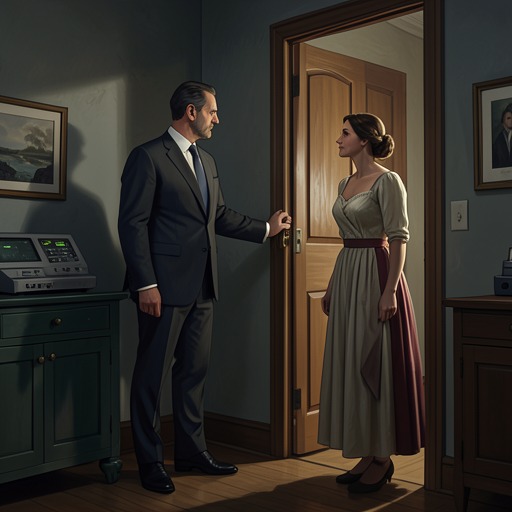
One evening, Svetlana is naked on the end of Ilya’s bed, searching the television for a game. She settles beside him against the headboard and takes a drag from the cigarette she removes from his lips, then teases him for having supposedly quit. The domestic informality of the scene belongs to their established familiarity, not to a declared partnership. Their talk moves easily between smoking and hockey, with neither subject requiring the solemnity that Ilya’s public identity might invite elsewhere.
Desire Without a Promise
When the game and their joking pause, Svetlana draws her knees to her chest and asks whether they are going to have sex again or whether she should get dressed because she is cold. Ilya considers the question, then says that he is hungry and that she should get dressed. She looks briefly surprised before her expression settles into the same cool indifference as his. The exchange ends without an argument or a declared rejection. It shows the practical, unceremonious terms of their arrangement: sex is possible, but neither treats it as an obligation.
That moment also gives the relationship a limit. Svetlana asks directly for what she wants, while Ilya declines for an immediate, ordinary reason. Her surprise registers the unexpected answer, but the scene does not expand it into hurt or conflict. She adjusts to his tone, and the evening continues on its casual footing. The text thus gives her agency within the encounter without suggesting that the encounter carries a commitment either of them has not agreed to.
Ilya’s Marriage Calculation
Later, in a conversation with Shane Hollander, Ilya says he might marry an American woman and identifies Svetlana as a sensible Russian woman living in Boston whom he likes. He imagines marriage as a business deal lasting until he becomes a citizen. The proposal exists only as Ilya’s expressed possibility in that conversation: the account does not show him asking Svetlana to marry him, establish that she knows about his thought, or confirm that any marriage takes place.
The idea makes explicit how Ilya separates practical security from romantic attachment. He can value Svetlana and enjoy their uncomplicated intimacy while considering marriage in instrumental terms. Calling her sensible fits that calculation, but it does not establish that she has agreed to serve that purpose. In the narrative, she is therefore more than a passing hookup, yet less than a confirmed prospective spouse: she is a person Ilya likes and returns to, whom he also imagines fitting a plan for his citizenship.
Narrative Role
Svetlana’s scenes define an alternative to intimacy built around expectation or reverence. She knows hockey from both family history and close attention to the game, speaks Russian with Ilya, and meets him with blunt humor rather than awe. Their physical relationship remains explicitly casual, and the encounter in which she asks whether they will have sex again ends with an uncomplicated no.
Her later appearance in Ilya’s marriage calculation changes the stakes of that casual connection without changing its established terms. The text places his practical fantasy beside their no-expectations arrangement, but does not collapse one into the other. Svetlana’s importance lies in that tension: she is a familiar, self-possessed presence in Ilya’s Boston life, and the woman he can name when imagining a marriage of convenience, while the story leaves her own knowledge, response, and future outside the evidence shown.